
Introducing PRAXES Medical Group - Our Telemedicine Partner
Welcome to our brand new blog series, where we take an in depth look at some of the key partners we work with. These are the companies and people who work away behind the scenes to keep our clients safe. So, we thought it would be a fun and useful exercise to review what makes them special and such an important part of the team.We’re starting the series with our telemedicine partner, PRAXES Medical Group.
Based in Halifax, Nova Scotia, PRAXES was formed in 1997 by CEO Susan Helliwell and her husband and Senior Medical Director Dr. John Ross along with five other emergency physicians.
The original aim was to provide telemedical support to the offshore oil and gas industry which is active in Nova Scotia.

Canada's coastlines offer some of the world's most challenging environmental conditions for maritime Search and Rescue (SAR) activity, with the East coast delivering severe sea states and gale force winds, freezing spray, ice cover and fog. During winter storms, waves can reach up to 30 metres in height and winds measuring 160 kilometres per hour are not uncommon. During the spring and summer months, large areas of fog reduce visibility to near zero. The West Coast has similar weather conditions, but the temperatures are more stable. Other areas such as the Great Lakes and the Arctic, provide their own unique challenges.
This telemedicine support from the team of doctors is the core of PRAXES medical services and the goal is to manage and treat patients on site where possible. This helps to avoid sometimes unnecessary, expensive and potentially dangerous medical evacuations (medevac’s), costly vessel delays and diversions, and operational stoppages. Understanding the difficult environment and the stress around calling for support is what sets this team apart.
All 20 doctors are specialists in emergency medicine, licensed and located in Canada. There are at least 3 doctors on shift 24/7 and they are able to speak English and French. This is scalable though, reactive to busy periods or client requirements.
New recruits are typically referred by the current team before careful training. They must demonstrate the skill and expertise to work with a wide spectrum of clients including doctors, nurses, paramedics, and all the way to a workplace first aider. Many of the doctors are also specially trained as marine medical examiners and qualified to issue the Canadian seafarers medical certificate.
By providing training and comprehensive medical kits (custom, MCA or IMO medical kits) for remote environments, the Doctors can guide onsite first aid teams to deliver enhanced care.
Many clients operate in environments where the health and safety of employees is paramount, where transport can be challenging, and definitive care is hard to access including maritime, mining, commercial fishing, oil and gas, yachting travel, mountaineering and expedition. Operations cover areas off the coast of Canada, the Mediterranean, Pacific, Northern Canada, Greenland, the Arctic and Antarctic.
PRAXES also works with a number of Government departments and other industries operating in areas where access to healthcare and emergency medical services is at best challenging, and at worst, non-existent.
The PRAXES team created their own proprietary software called Praxes Connect to remove the administrative tasks from the doctors, allowing them to focus on providing a high quality of medical care. It’s easy and intuitive to use, as is the call process. It has changed massively in the last 27 years and incorporates secure electronic patient record, inventory management and reporting including monitoring health trends.
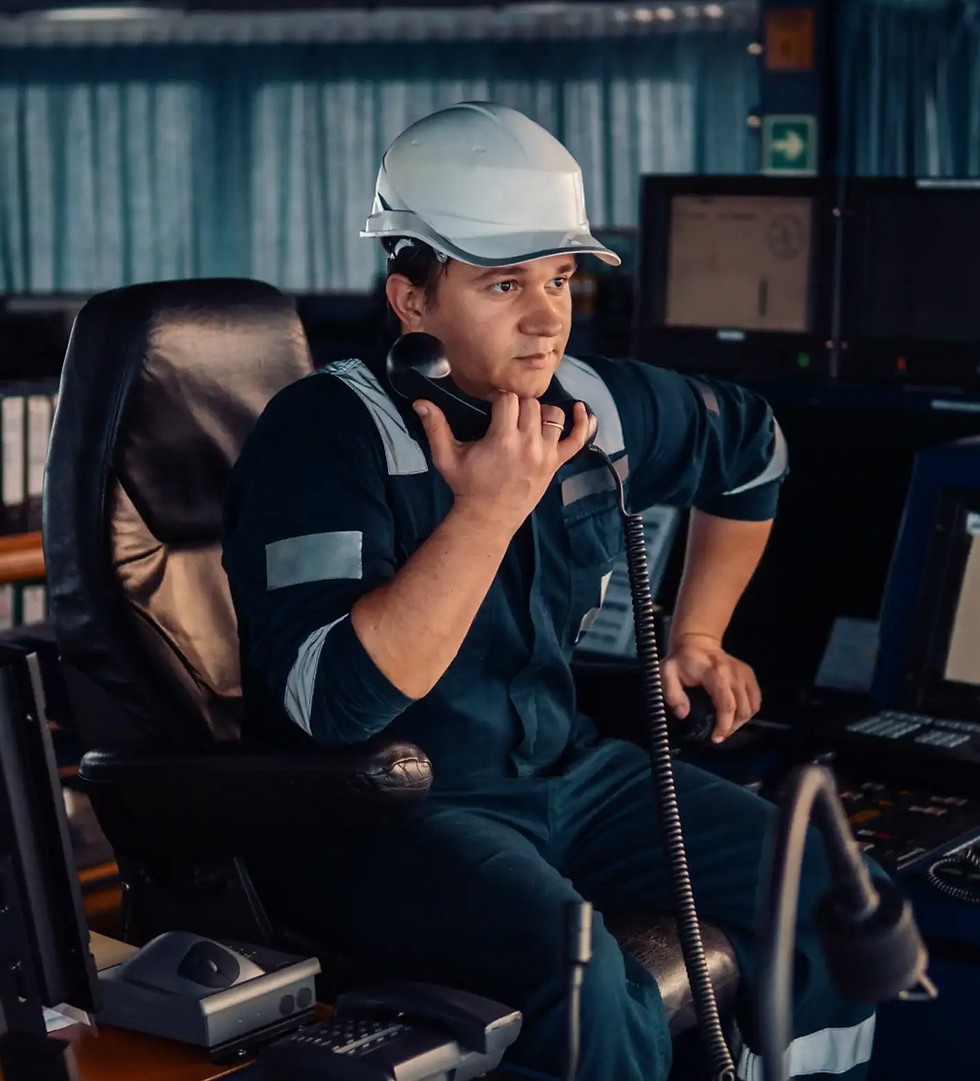
Clients can connect with PRAXES via cell phone, satellite phone, ship-to-shore radio or more recently, by secure messaging or even video, enabling PRAXES doctors to deliver the best medical care possible. Doctors access the patient record to assess cases and voice recordings of calls are stored for review if needed.
Test calls are encouraged to ensure all callers are comfortable with the process and system. In an emergency, if a call is made from a ship, their shoreside team is notified to make sure they are aware of a medical concern onboard. The average response time for calls is 2 minutes, and always less than 4 minutes, to connect a caller directly to a doctor.

PRAXES provides Telemedicine for the Joint Rescue Coordination Center (JRCC) nationwide and are contacted whenever the JRCC receives notice of a medical event occurring on board any vessel in Canadian waters. PRAXES provides medical recommendations, including how quickly someone needs additional medical care and they work with the JRCC as they determine the asset i.e. helicopter, vessel diversion, rendezvous, etc.
Having the right onside medical staff and kit, plus immediate access to doctors for minor to major medical events can significantly improve a patient’s outcome, reduce the need for a medical evacuation and help to manage stress for the whole remote team and a family at home. The care doesn’t end there either; PRAXES doctors can provide details to a receiving facility for a smooth handover and can help patients access the right care at home and get back to work as soon as possible.
The Red Square Medical team works closely with PRAXES to provide assistance to the four ships that we are contracted to provide 24/7 FleetMed Support to. Two of these are expedition ships which complete an annual season in the Antarctic and visit other remote destinations in between. In our next blog in this series, we’ll take a closer look at how that works.
For now, we’re going to review a couple of case studies to demonstrate the benefits of this level of support.

CASE STUDY 1
A 34 year old male complaining of chest pain and a fast heart rate.While the onboard medic carried out a thorough assessment, there was a technical problem obtaining a 12-lead ECG (EKG). Blood tests were normal, symptoms had resolved and the history suggested a non-cardiac cause, so it was decided to observe the patient and call back if anything changed.
Two hours later, the medic had managed to acquire a 12-lead ECG. On review by the same PRAXES doctor, some abnormalities were noted. Logistics for a medevac were reasonable so the decision was made for the patient to go ashore for further assessment. In the meantime, PRAXES were able to advise on treatment recommendations.
CASE STUDY 2
This took place on a scientific vessel inside the Arctic Circle. The Captain woke with an ‘odd feeling’ and paralysis to one side of his face.The onboard Nurse assessed and was rightly concerned about the risk of a stroke. However the geographic locations and the fact this was the Captain meant that an early medevac would create significant issues.
Photos of the Captain’s face were sent to PRAXES and in combination with further history taking and the Nurse’s examination, it was confirmed that the patient was suffering from Bell’s Palsy, rather than a stroke. This is self resolving and was able to be treated onboard, without affecting the patients work duties, thus avoiding an expensive medevac and finding a replacement Captain.
CASE STUDY 3
While approx. 300 miles offshore, five deck crew on a cargo ship were injured after a large wave swamped the ship. The most serious patient was in a critical condition with hypovolaemic shock, pneumothorax, an intracavitary bleed and suspected intracranial bleed. He had a significant head injury with a reduced level of consciousness and shallow, slow breathing.
The PRAXES doctor coached the Captain to enable him to administer treatment, monitor vital signs and treat the head injury. Over several calls to PRAXES, the Captain was supported and talked through carrying out a needle decompression of the chest.
The JRCC helicopter was notified and the ship diverted into helicopter range, with the plan to carry out a medevac from the ship and airlift the patient to hospital. Sadly the patient went into cardiac arrest and despite multiple resuscitation attempts, passed away onboard as a result of his injuries.
However, PRAXES doctor was able to continue to assist with the other four patients, one with worsening back pain, one with manageable back pain, one with pleuritic chest and abdominal pain, and the last with shortness of breath and back pain. Under the Doctor’s guidance, the Captain was able to monitor vital signs for all four patients and give opioid pain relief while the ship diverted to port. Photos of injuries were sent to the Doctor to help evaluate severity.
All four patients made it safely to hospital for treatment. The same Doctor supported the Captain and crew of the vessel for over 18 hours and worked with the JRCC to make decisions on transport as well as treatment recommendations. Sadly the medevac wasn’t needed in the end, but even good communication around this meant that the SAR crew stayed safe and additional risk to them and the crew were avoided.
We hope you’ve enjoyed this blog and if you have any questions, as always, please get in touch. Keep an eye out for next month’s follow on blog, where we explain more about the relationship between Red Square Medical and Praxes and why it works so well.


Comments